01
Ingest the script
PDF, FDX, Fountain, DOCX, or plain text becomes one normalized source of truth.
StageGraph
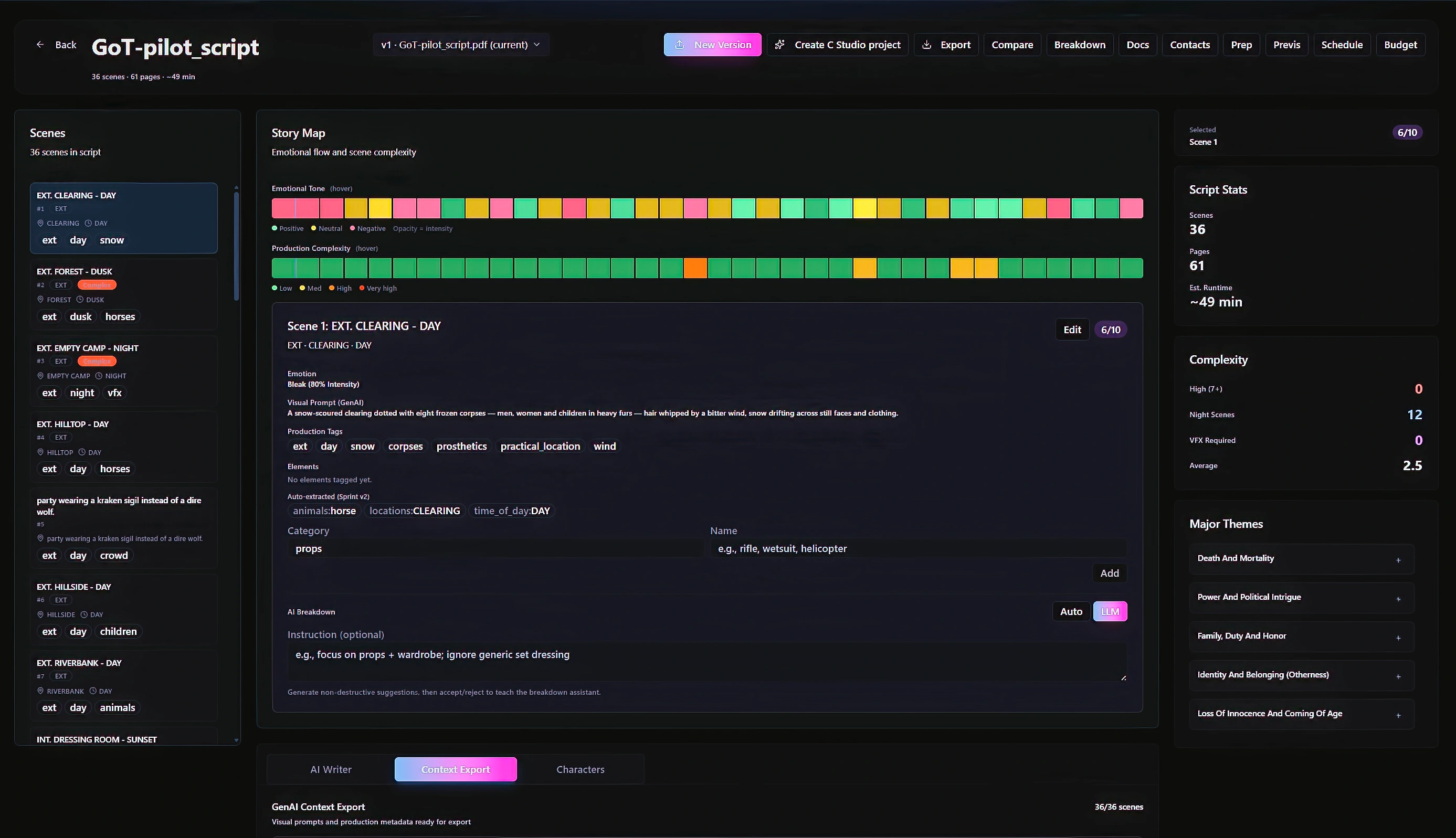
StageGraph turns scripts into structured story context, planning artifacts, and reusable intelligence the rest of C can build on.
Script to context
From raw script to reusable story intelligence
Input
Script files and pasted text
Output
Structured context and planning artifacts
Value
Reusable intelligence across the workflow
Script to artifact
Upload the script once. Turn it into story intelligence the whole workflow can use.
01
PDF, FDX, Fountain, DOCX, or plain text becomes one normalized source of truth.
02
Scenes, characters, themes, locations, and production signals become structured, inspectable context.
03
Planning outputs and context summaries turn narrative understanding into working material.
04
That context flows into Sense, Studio, and downstream workflows instead of dying in a static report.
Why this matters
What it replaces
Static breakdown spreadsheets and handoff notes give way to a living context layer the product can actually act on.
Downstream value
StageGraph is not just analysis. It improves what happens next.
Sense
StageGraph gives Sense structured story understanding before any timeline action begins.
Studio
Editors inherit scenes, arcs, themes, and planning context instead of reconstructing them manually later.
Platform
The value is not only extraction. The value is that the intelligence survives into the rest of the system.
Proof next
Then move into Sense or Studio to see how structured context becomes workflow value.